
When we think about movement such as walking, lifting, or even typing, we often think about our muscles and our bones doing the work. However, there’s a key component in there working quietly behind the scenes, our tendons.
What is a tendon?
Our tendons are bands of connective tissue in our bodies that connect our muscles to our bones.
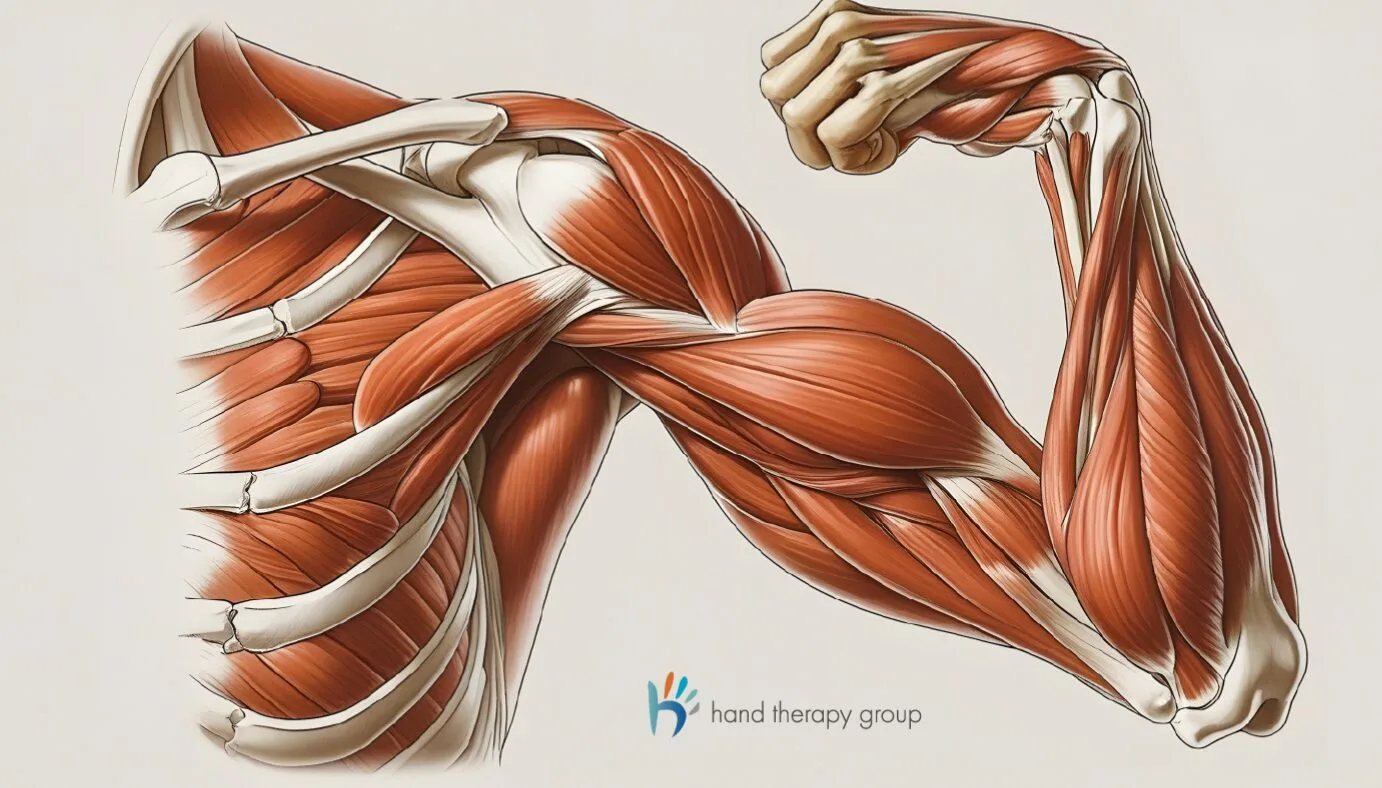
Think of them like ropes that anchor our muscles to our skeleton. Their primary function is to transmit force from the muscle to the bone. When a muscle contracts, it pulls on the tendon, and the tendon then pulls on the bone, creating movement.
Tendons are made primarily of collagen, a strong protein that gives them both strength and flexibility.

They’re designed to withstand the tension and stress of daily activity and in our hands, they play a critical role in enabling motion like gripping, pinching, and pointing.
There are two main groups of tendons in the hand:
– Flexor tendons: Located on the palm side of the hand, these allow you to bend your fingers and thumb.
– Extensor tendons: Found on the back of the hand, these allow you to straighten your fingers and thumb.
How do our hand tendons work?
When you want to make a fist, your brain sends a signal to the flexor muscles in your forearm. These muscles contract, pulling on the flexor tendons, which then pull your fingers into a curled position.
To open your hand again, your extensor muscles contract, pulling on the extensor tendons on the back of your hand. This intricate push-pull system happens all the time without you needing to think about it.
Tendon Injuries
Despite their strength, tendons aren’t invincible. Repetitive movements, overuse, or sudden forces can cause damage.
They are often injured in the hand because they are situated relatively superficially, which exposes them to greater risk of injury.
In hand therapy, we often treat people after tendon lacerations, such as from knife accidents or broken glass. These injuries usually require surgery and extensive post-operative therapy to regain movement and function.
Tendons can also become painful and inflamed if they are overloaded. Your hand therapist can assess this and provide advice on how to best manage it.

Tendon Healing: Why it takes time
One frustrating aspect of tendon injuries is how slowly they heal. Tendons have a limited blood supply, which means nutrients and oxygen take longer to reach them.
As a result, recovery from tendon injuries takes a while depending on the type and severity of injury. They often require weeks to months, and sometimes even longer to heal. Hand therapy, and targeted exercises, will give an injured tendon the best chance of healing in the shortest timeframe possible.
Your hand tendons may be small, but their impact is enormous. They are essential to providing the strength, finesse, and dexterity that make your hands so incredibly useful.
Next time you notice your fingers tapping across a keyboard or scrolling on your phone, take a moment to appreciate what’s going on behind the scenes and don’t take those tiny tendons for granted.


0 Comments