
At Hand Therapy Group, we regularly use both waterproof and non-waterproof casts to support healing after a fracture and other injuries. We can provide both plaster casts and fiberglass casts.
What’s the Difference?
Plaster casts are heavier and not waterproof. They offer excellent molding and are often used in the early stages after a fracture or reduction. Whereas Fiberglass casts are lighter, stronger, and more durable, making them ideal for longer-term wear.
While fiberglass is inherently waterproof, the key difference between a waterproof and non-waterproof fiberglass cast lies in the lining or the material that sits directly against your skin.
We offer both waterproof synthetic linings and non-waterproof cotton linings, and the choice between the two depends on several clinical and lifestyle factors.
Why you might need a Waterproof Cast

A waterproof cast is a great option for many patients, particularly if:
- You want to maintain your regular hygiene routines, including showering or bathing without needing to cover your cast.
- You participate in water-based activities like swimming (with your therapist’s approval).
- You prefer the convenience and peace of mind that comes with easier maintenance.
With a waterproof cast, you can get your cast wet without worrying about damaging the material or risking skin complications due to trapped moisture.
How to Wash a Waterproof Cast
Even though a waterproof cast can get wet, it’s important to rinse and dry them properly:
- Rinse your cast with clean water after swimming or showering.
- Use a towel to gently absorb surface water.
- Elevate your arm for a few minutes to let the water run out of the cast.
- Let the cast air dry for around 20-30 minutes or use a hairdryer on a cool setting to speed up the drying process.
- Avoid using hot air, as it can damage the cast lining or irritate your skin.
Why You Might Need a Non-Waterproof Cast
In some cases, a non-waterproof cast is the safer and more appropriate option. We typically recommend a non-waterproof cast if:
- You have an open wound or surgical incision under the cast.
- Your skin is at higher risk of irritation or infection.
- Creases in the cast can mean water might get trapped and resulting in skin breakdown such as on an elbow cast.
- The treating clinician has determined that keeping the area dry is critical to your recovery.
The cotton lining in non-waterproof casts absorbs moisture, which can lead to skin breakdown or infection if the cast gets wet. That’s why it’s important to keep the cast completely dry.
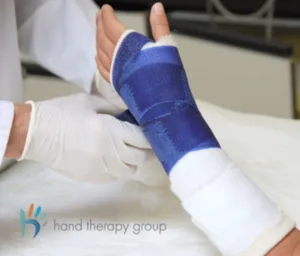
How to Care for a Non-Waterproof Cast
- Avoid water exposure, use waterproof covers when showering or in wet environments.
- If the cast does get wet, contact your therapist as it may need to be replaced.
- Keep the cast clean, and avoid inserting objects down the cast to scratch an itch
What is a Cast Reinforcement?
After certain procedures like a closed reduction (realigning a broken bone without surgery) your therapist may apply a cast reinforcement. This involves adding a layer of fiberglass over your post op plaster cast to strengthen it and make it more durable for everyday use. We typically do this a week after your closed reduction once your swelling has settled down to promote a better fit in the cast.
It’s important to note:
- Even with a fiberglass outer layer, the underlying plaster is not waterproof.
- A reinforced cast is splash-proof, but not waterproof. The lining and plaster must be kept dry to prevent breakdown or skin complications.

Final Thoughts
If you’re unsure about what type of cast you have, or whether it can get wet, always ask your treating therapist before exposing it to water.
At Hand Therapy Group, we tailor each cast to your specific injury and healing needs. Whether you receive a waterproof or non-waterproof cast, we’ll provide clear instructions to help you take the best possible care of your injury.
If you have any questions or concerns about your cast, don’t hesitate to contact your therapist. We are here to help every step of the way.


0 Comments